top of page

Technical

Public·34 members

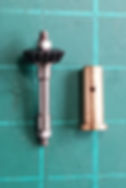
There's always something new, eh! My number 96, Papyrus, has had a maintenance schedule performed and in doing so I decided to renew the wiper assembly. The old one had decidedly gone beyond its use by, the wires were brittle and the insulation was very 'ows your father. So, replacing was easy enough but when I connected the loco to power, both lights came on and remained on regardless of the position of the regulator. On inspection the soldering looked ok, there was no bleeding of solder onto the adjacent connection on the PCB. So next was to look at the business end and the wiper board, and here was the problem, the brass wiper had not been segmented so this created a closed circuit across the cab lights. Remediation was easy, using a new craft blade I gently cut across the wiper to create separation and this rectified the…

2 Cab Lights
2 Cab Lights
New Wiper without Segmentation
16 Views
David & Val
4 days ago

Interesting - never seen one like that before. At least it was a nice easy fix.

David

david.barge86david.barge86
david.barge86

Bad running and controller cutout

I’ve had an issue develop on my A4 Mallard whereby the loco has had a significant degradation in performance to the extent it no longer runs. I place the loco on the track and in the process of warming the water the controller cutout kicks in with a loud beeping sound. Further more the rails are extremely hot to the point of melting the plastic sleepers. I’ve had a similar issue before which I fixed by replacing the tender wheels. I’ve experienced a couple of uncontrolled motor operation whereby the loco stops and then runs in reverse leading upto the issue. Any advice to fix the issue would be much appreciated.

117 Views

I would suspect the tender wheels again. The controller cut-out with warning sound is an indication of "high resistance". That can be from many things, but when you mention hot rails as well, then it points to high resistance in the tender wheel pick-up mechanism.

Do they all still turn freely?

Dirt = high resistance, so I would take the tender wheels out and clean the bearing surfaces - it's much easier if you have the club's tool for pushing the axles out of the wheels, then you can clean the axles as well. Reassembly requires a perfectly "square" push of the axles back in to the wheels, so a simple vice does the job nicely.

Hope this helps,

David

Airline boiler adaptor help?

I currently have the boiler airline adaptor from the clubs shop because I plan on tinkering with my mallards timing, but however I am confused on what type of air compressor I will need to use? Can anyone point me in the right direction like will any compressor work?

122 Views

I use a cheap one from a spray painting kit - not perfect, but does the job. It must provide 2bar pressure (most spray painting ones will claim 4bar). Mine is a little short on flow rate, so won't run a model quite as fast as it will go on steam, but that doesn't matter for me to debug/fix locos on my bench.

David

Squeeling Controller, Why?

A few days ago I sent in a post on maintaining my DDE. After re-assembly I put it on test only to hear the squeel from the controller. Now squeeling usually only occurs when there is no loco on track or when it has run out of water. But this wasn't the case here. The only change I made to the loco was to put in a new wiper and its wires to the PCB. On close inspection to see if anything was amiss I noticed the motor wires were on their last strands so I re-soldered, but still no luck, it still squeeled. Hmmm, is the tender at fault? So I tested the tender coupling it up to my Seagull and everything worked, so the tender is ok. Then what has gone wrong 🥶

If anyone can shed a light on this problem I would be very grateful.


An Odd Combination
An Odd Combination

264 Views

Can you explain your term "squealing" better please. Is this the high resistance/no loco/run out of water alarm or the 10kHz high pitch noise that results from the heater PWM ?

As Markus says - check the electrical path to the heaters. If you have a DVM, the loco and the tender should each separately be about 4 ohms. When connected together, the combination should be around 2 ohms.

David

bottom of page