


Worn bearing allows timing to jump a tooth
The OOLS locos use brass bushes for their bearings on the three sets of driving axles. Brass is not the hardest wearing material known to man!
This loco is a club DDE that has clocked up a lot of miles at various roadshow events over the last 10 years or so. At the recent Locomotion event, it was running fine, then suddenly lost power and went all lumpy. Eric was manning the repair bench at the time and diagnosed a worn out brass bush on the centre driving axle which had allowed the bevel gears to jump a tooth which in turn put the timing out. The video below was taken in this state before I did anything to the loco.
Once I had dismantled the loco, I could see that the vast majority of the play was in the brass bush, although there were some fair old wear marks on the axle itself. What was worrying was that the brass bush almost fell out of the chassis - it took no effort at all to push it out. This raises the possibility that the brass had also been turning in the chassis casting.
I have replaced both the brass bush and the axle to be on the safe side. I had used some medium strength thread-lock to hold the bush in the casting and hopefully prevent it from turning.
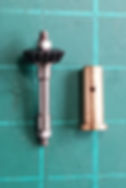
Whilst checking the loco out, I noticed that there was some play in the rear driving axle as well, so replaced those bushes just to be on the safe side - it was nothing like as bad as the play in the video above.
Loco has been rebuilt and just needs some final testing before it's ready to return to service on the roadshow.
Another new potential failure mode for high mileage locos dealt with.
David